
If you have ever wondered how much a cash buyer would pay for your house, you are not alone. Sellers in Cincinnati and Dayton ask this question constantly, and the honest answer is that the number comes from a specific formula, not a gut feeling. Understanding that formula puts you in control before you ever speak to a buyer.
Cash offers are not random. Every number a local buyer presents is built on real math, and once you understand the pieces, you can estimate your own range before anyone knocks on your door.
How Do Cash Buyers Come Up With Their Offer Price?
Most people assume cash buyers just name a low number and hope the seller accepts it. The reality is more structured than that. We work from a consistent formula that accounts for the home’s potential value, the cost to get it there, and the margin needed to make the project financially workable.
The Basic Formula Explained
The foundation of every cash offer is straightforward:
Offer Price = After Repair Value (ARV) minus Repair Costs minus Investor Margin
Each of those three variables has a real dollar value attached to it. Change one number, and the offer changes with it. This is why two houses on the same street can receive very different offers even if they look similar from the outside.
Why Cash Offers Are Lower Than the Listing Price
A traditional sale assumes the home is move-in ready, is marketed to retail buyers, and is sold through an agent over several weeks or months. A cash sale skips all of that. We buy the home in its current condition, take on all repair risk ourselves, and carry the property until it is ready to be resold or rented.
That responsibility has a cost, and that cost is reflected in the offer. A lower price is not a trick. It is the trade-off for speed, certainty, and skipping the hassle of listing.
How We Evaluate Your Specific Property
When we look at a home in the Franklin area, we consider several factors: the neighborhood, the home’s current condition, what similar nearby homes have recently sold for, and what it would realistically cost to bring the property up to a sellable standard.
None of this is guesswork. We pull actual sales data, walk through the property, and price our offer based on defensible numbers.
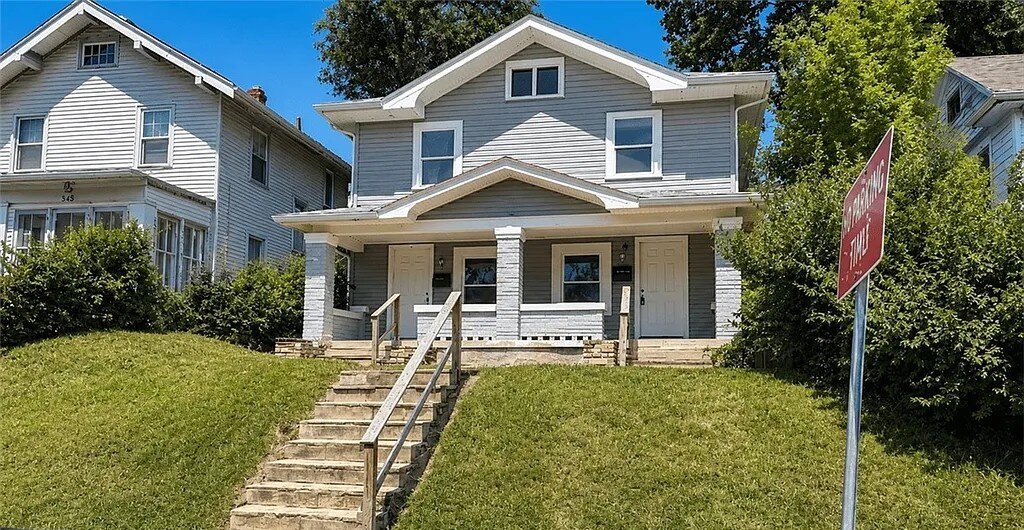
What Is ARV and Why Does It Control Your Cash Offer?
After-repair value (ARV) is the most important number in any cash offer calculation. It represents what your home would sell for on the open market after all repairs and updates are completed. Every other number in the formula flows from this single figure.
How ARV Is Calculated
ARV is based on comparable sales, which are recently sold listings of similar homes in your area. We look at homes that are close in size, age, style, and location to yours. The sales price of those updated, move-in-ready homes sets the ceiling on what your property could be worth after renovation.
If similar three-bedroom homes in your Cincinnati neighborhood are selling for around $220,000 after full renovation, that becomes the ARV we work from. Everything else gets subtracted from there.
Why ARV Is Not the Same as Your Offer
Here is where sellers sometimes feel surprised. The ARV is not the offer. It is the starting point before costs and margin are removed. A home with a $220,000 ARV will not receive a $220,000 cash offer because the buyer still has to spend money to turn the property into its finished version.
The gap between ARV and the final offer is where repairs, holding costs, and investor margin come into play.
What Happens When ARV Is Uncertain
Sometimes comparable sales are limited or inconsistent. This can happen in rural areas or neighborhoods where homes rarely sell. When the ARV is harder to pin down, buyers may widen their margin slightly to account for the added uncertainty. A clearer market with strong recent sales typically leads to a tighter, more competitive offer.
Which Costs Get Subtracted From Your Home’s Value?
Once ARV is established, the formula works backward. We subtract all costs we expect to incur before the property is ready to sell again. Those costs fall into a few predictable categories.
Repair Cost Estimates
The repair cost estimate is the largest variable in most offers. This covers everything needed to bring the home to a retail-ready condition: roofing, plumbing, electrical, HVAC, flooring, kitchens, bathrooms, and cosmetic updates. Minor cosmetic work costs far less than a full structural renovation.
We walk through the home and price out repairs based on current labor and material costs in the Cincinnati and Dayton markets. A home that needs a new roof and a kitchen overhaul will carry a much higher repair deduction than one that just needs paint and carpet.
Holding and Closing Costs
Beyond repairs, we hold the property for a period before reselling it. During that time, we pay property taxes, insurance, utilities, and financing costs. These are real expenses that add up, and they factor into what we can responsibly offer.
Closing costs on both ends of the transaction, when we buy and when we resell, also chip away at the margin. Together, these holding and transaction expenses typically represent several percentage points of the ARV.
Investor Margin
The investor margin is the profit built into the deal. This is not excessive. Without a workable margin, the project is not worth the risk or the capital required to execute it.
Most local buyers in Cincinnati and Dayton work within a margin that reflects market conditions, project complexity, and competition in the area. On a straightforward deal with predictable repairs and a strong ARV, margins may be tighter. On a riskier or larger project, more cushion is needed.
The net offer amount you receive is what remains after ARV, repair costs, holding costs, and investor margin are all accounted for. Understanding this breakdown helps you evaluate any offer fairly rather than reacting to the number in isolation.
Frequently Asked Questions
How much will a cash buyer pay for my house compared to the market value?
Cash buyers typically offer less than the full market value, often at a price that reflects the home’s current condition, minus the cost of repairs and a reasonable investor margin. The exact percentage varies based on the home’s location, condition, and the local comparable sales at the time of the offer. Sellers trade some of that value for the convenience of a faster, simpler closing without repairs or showings.
What makes a cash offer go up or down?
The biggest factors are the home’s after-repair value, the estimated repair costs, and current market conditions in your neighborhood. A home with strong comparable sales nearby, lower repair needs, and a clear resale path will generally receive a stronger offer. Uncertainty around any of those variables tends to push the offer lower to account for added risk.
Does Ohio Cash Buyers charge fees or commissions?
We do not charge seller commissions or buyer fees. Unlike a traditional listing, there is no agent commission deducted from your proceeds at closing. The offer we present is what you can expect to walk away with, minus any liens or payoffs tied to the property itself.
Need to sell your house fast?
Get a fair cash offer today. No repairs, no fees, no pressure — we can often close in just a few days.
Talk to a local buyer
Cincinnati (513) 815-5000
Dayton (937) 756-5000